Best Medical Alert Necklaces (2026)

Search “medical alert necklace” and you get two completely different products jumbled together, which is exactly why the results are confusing. One is a help button worn on a cord that summons a 24/7 monitoring center. The other is engraved jewelrythat lists a senior's conditions so paramedics can read it. They cost different amounts, do different jobs, and many seniors are best served by owning both. This guide sorts out which one you actually need, then names our pendant picks and covers what to put on an ID tag.
Which do you need?
Choose a monitored pendant if the goal is to bring help fast when a senior falls or has an emergency, especially if they live alone. Pressing the button reaches a trained operator who can dispatch EMS and call family.
Choose a medical ID necklaceif the goal is for EMTs to know a senior's conditions, allergies, and medications when the person can't speak. It is a one-time purchase with no fee, and it summons no one on its own.
Get bothif a senior has serious health conditions and lives alone. The pendant brings responders; the ID tag tells them what they're dealing with once they arrive.
The core distinction
Two Products, One Name
Before picking anything, get the categories straight. Here is what each one does, what it costs, and who it fits.
| Factor | Monitored help pendant | Medical ID necklace |
|---|---|---|
| What it does | Presses to summon a 24/7 monitoring center | Displays engraved medical info for EMS to read |
| Electronics | Yes: button, speaker, cellular or landline | None; engraved metal jewelry |
| Summons help? | Yes, dispatches EMS and calls family | No, it only informs whoever reads it |
| Typical cost | ~$25–$50/mo (some no-fee options) | One-time, roughly $15–$60 |
| Best for | A senior who may fall or need urgent help | A senior with conditions, allergies, or blood thinners |
Our top picks
Best Monitored Pendants
These are drawn from providers we have reviewed in full. Every one is worn around the neck as a pendant or lanyard, and prices match our individual review pages. Three are monitored; the last is a no-fee option for households with responsive family nearby. If a senior would sooner wear something on the wrist, the same brands offer a watch or wristband; see our medical alert watch guide.
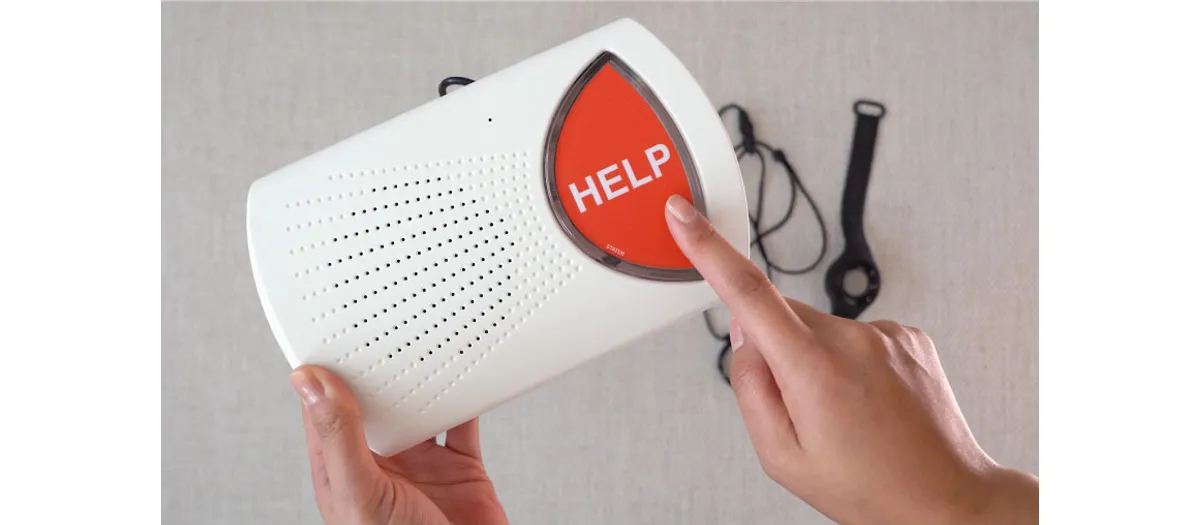
Bay Alarm Medical (in-home pendant)
$27.95/mo landline · $34.95/mo cellular
- Monitoring:
- 24/7 UL-listed, CSAA Five Diamond center
- Fall detection:
- Add-on (+$10/mo)
The lowest monthly price of the monitored brands, and the waterproof pendant is worn around the neck by default. Free monitoring for a second household member (a one-time button fee). Best if the senior is mostly at home.
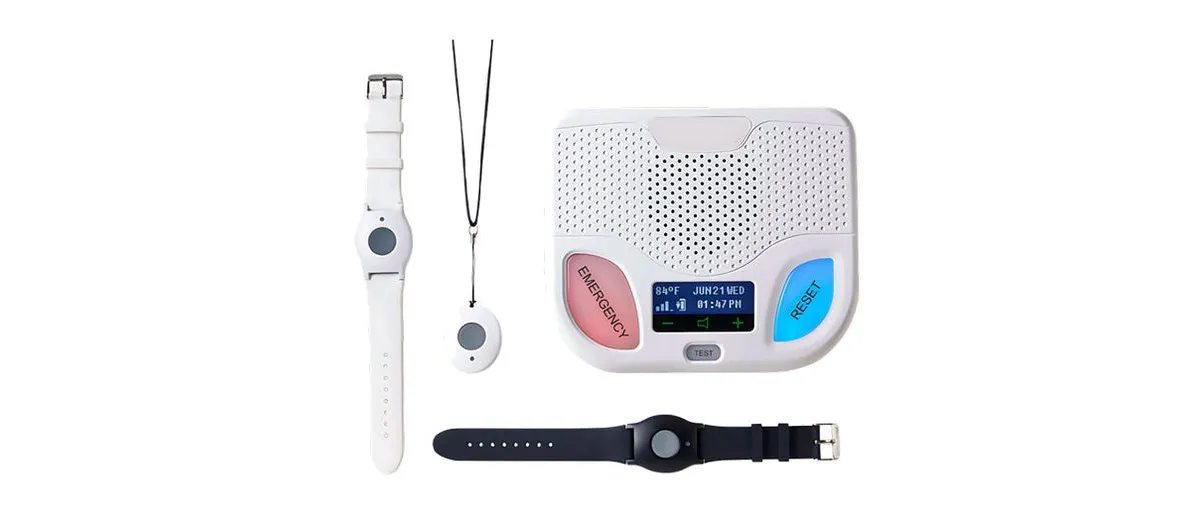
MobileHelp Classic
From $29.95/mo
- Monitoring:
- 24/7 US-based, on AT&T cellular
- Fall detection:
- Add-on (~$11/mo)
A no-contract cellular home system with the included help button worn as a neck pendant, and one of the widest base ranges here at up to 1,400 ft. No equipment fee and a 30-day money-back guarantee.
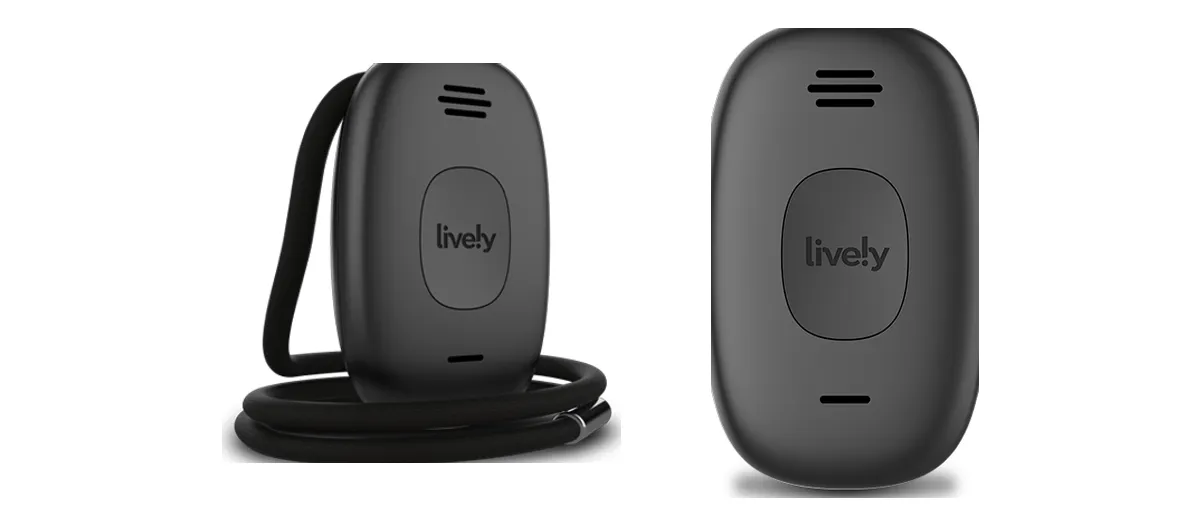
Lively Mobile2
$24.99/mo + $79.99 device
- Monitoring:
- 24/7 US-based Urgent Response
- Fall detection:
- Add-on (+$9.99/mo)
A compact GPS button worn on the included lanyard, so it works away from home, not just inside it. The cheapest fall-detection add-on in our set. The trade-offs are a one-time device cost and recharging every day or two.
LogicMark Freedom Alert
$299 one-time (no monthly fee)
- Monitoring:
- None (dials preset contacts + 911)
- Fall detection:
- Not available
A one-time-purchase landline pendant with no subscription. It dials up to four preset family numbers and 911 directly rather than a staffed center. Right only when responsive family lives nearby.
On fall detection
Several of these pendants offer automatic fall detection as an add-on, about $10–$11 a month. It calls the center on its own when it senses a hard fall, so the wearer does not have to press anything. The catch is the same as any pendant: it only works if the senior is actually wearing it. A detector left on the dresser detects nothing. We cover how it works and its accuracy limits in our fall-detection guide.
Two of these deserve a note. Life Alert also sells a neck pendant, but at an estimated $49.95/month on a three-year contract it costs far more than the picks above for comparable protection; see our Life Alert cost breakdown. And the LogicMark Freedom Alert is the one pendant here with no monthly fee, which suits families who can answer a direct call; the trade-off is that no monitoring center is dispatching help. Our no-monthly-fee guide weighs that decision.
If you buy through this link we may earn a commission; it never changes our ratings.
The other necklace
Medical ID Jewelry: What to Engrave
This second product is a small engraved tag worn on a chain. When a senior is unconscious or confused after a fall, it tells first responders what they need to know in the seconds that matter. It has no button and no battery. It cannot call anyone. What it does is speak for the person when they can't.
The universal medical symbol, a six-pointed Star of Life or a serpent-and-staff, signals to EMS that the tag carries health information worth reading. Emergency clinicians and pharmacy guidance generally advise engraving the essentials: major conditions such as diabetes, epilepsy, or a heart condition; serious allergies; whether the person takes a blood thinner like warfarin, which changes how bleeding is treated; and an in-case-of-emergency (ICE) contact number. Keep it short and legible; a paramedic reads it at a glance (National Institute on Aging).
Engraved ID necklaces are a one-time purchase, roughly $15 to $60 depending on the metal and engraving, and they come out of pocket; Medicare does not cover them any more than it covers a monitored system. Pharmacies, jewelers, and online engravers all sell them, and general marketplaces carry a wide range. If you shop there, it helps to search by the exact terms EMS looks for.
If you buy through this link we may earn a commission; it never changes our ratings.
One more time, because it is the mistake families make most: a medical ID necklace alone summons nobody. It is a companion to a help button, not a replacement for one. If the risk is a fall with no one around, the ID tag will not bring help; a monitored pendant will.
Questions we hear most
Frequently Asked Questions
What is a medical alert necklace for seniors?
It depends on which product you mean. A monitored medical alert necklace is a waterproof help button worn on a cord or lanyard around the neck; pressing it connects the senior to a 24/7 monitoring center that can dispatch EMS and call family, for a monthly fee. A medical ID necklace is engraved jewelry that lists a senior's conditions, allergies, and medications so paramedics can read it if the person can't speak. Many families use both, because they solve different problems.
Is there a difference between a necklace for elderly men vs women?
The device is the same. Monitored pendants and medical ID tags are unisex electronics or engraved metal; there is no separate 'men's' or 'women's' unit. What differs is style: chain versus cord, tag shape, and metal color. If a senior dislikes how a pendant looks, a slimmer chain or a wrist version usually solves the compliance problem, and both men and women wear the same underlying device.
Does Medicare pay for a medical alert necklace?
Original Medicare (Parts A and B) does not cover medical alert systems or the pendant. Some Medicare Advantage plans include a benefit that may help, and certain Medicaid waivers cover monitored systems in some states. A one-time medical ID necklace is an out-of-pocket purchase. See our guide on whether Medicare covers medical alert systems for the full breakdown.
Necklace, watch, or bracelet: which is best?
The best form is the one the senior will actually keep on. A neck pendant is easy to reach and simple to press in a panic, which is why monitoring companies default to it. A wrist button or watch looks more like normal jewelry and is harder to leave on the nightstand. A medical ID bracelet is often more visible to EMS than a necklace tucked under a collar. Match the form to the person's habits, not the spec sheet. Our medical alert watch guide covers the wrist option.
Can you wear a medical alert necklace in the shower?
The monitored help pendants from Bay Alarm Medical, MobileHelp, Lively, and other major brands are waterproof and are meant to be worn in the shower, which is where many serious falls happen. Confirm the water rating before you buy. Engraved metal medical ID necklaces are also fine to get wet. Take a pendant off for a bath only if the manufacturer says so.
Does a medical ID necklace call for help on its own?
No. A medical ID necklace is passive engraved jewelry with no electronics; it speaks for a senior only when a paramedic reads it. It summons no one. To actually call for help you need a monitored pendant or, for someone with attentive family nearby, an unmonitored auto-dialer. Many people wear both: the ID tag for when they can't speak, and a help button to bring responders in the first place.
For a monitored necklace pendant, the best value is Bay Alarm Medical at $27.95/month, or MobileHelp Classic from $29.95/month for the widest in-home range. If a senior leaves the house, Lively's Mobile2 adds GPS on a lanyard. For a senior with real health conditions, pair whichever pendant you choose with an engraved medical ID tag; together they cover both summoning help and telling responders what to do when it arrives.
Related reviews
Sources & references
- Bay Alarm Medical: pendant plans & pricing
- MobileHelp: Classic system
- Lively: Mobile2 GPS device
- LogicMark: Freedom Alert
- National Institute on Aging: Preventing Falls
- CDC: Older Adult Falls Data
- Medicare.gov: Coverage
Pricing and plan details are drawn from each provider's official website and verified periodically; confirm current rates at the point of purchase. Statistics are cited from the sources above.